Coconut shell charcoal has become a highly sought-after fuel source due to its high calorific value, low ash content, and environmentally friendly characteristics. Following the formula to make charcoal from coconut shells ensures that each batch meets professional standards for durability, calorific value, and clean-burning performance. Properly combining and processing these ingredients ensures efficiency, consistency, and long-lasting performance.
Key Ingredients of Coconut Shell Charcoal
Coconut shell charcoal is primarily made from natural coconut shells, but the production process may include additional components to improve quality, burning performance, and briquette formation.
1. Coconut Shells
The main ingredient in coconut shell charcoal is, of course, the coconut shell itself. Mature, dried shells are preferred because they contain high fixed carbon content and minimal moisture. These characteristics are essential for producing a dense, durable, and long-burning charcoal product.
Key properties of coconut shells include:
-
- High fixed carbon content (above 75%)
- Dense and hard structure for long combustion
- Low moisture content for easy ignition
- Minimal volatile compounds for cleaner burning
2. Natural Binders
For briquette production, natural binders such as tapioca starch, cassava starch, or other plant-based adhesives are added to the crushed charcoal powder. These binders help hold the material together during molding and prevent briquettes from cracking or breaking.
The binder ratio is critical too much binder can increase ash content and affect calorific value, while too little can cause brittleness in the final product.
3. Water
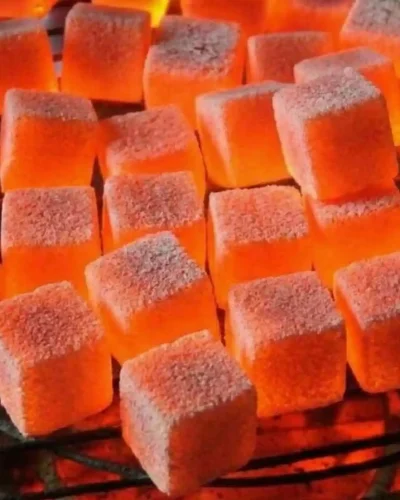
Water is often added during the briquette molding process to mix the charcoal powder and binder thoroughly. The correct moisture level ensures uniformity and makes the mixture pliable for pressing into consistent shapes such as cubes or hexagons.
4. Optional Additives
Some producers include additional natural additives to enhance burning performance or improve aroma. These may include:
-
- Sawdust or other plant fibers (to improve texture and ignition)
- Natural oils (to reduce dust and improve briquette cohesion)
While optional, these ingredients must be used sparingly to avoid compromising quality.
The Production Process of Coconut Shell Charcoal
Producing high-quality coconut shell charcoal involves careful preparation, processing, and quality control.
1. Carbonization
Selected coconut shells are carbonized in a controlled kiln at temperatures ranging from 400°C to 600°C. This process converts the shells into charcoal by removing moisture and volatile compounds while increasing fixed carbon content.
2. Crushing and Sieving
After carbonization, the charcoal is cooled and crushed into fine powder. Sieving ensures uniform particle size, which is crucial for consistent burning and briquette formation.
3. Mixing with Ingredients
Crushed charcoal is combined with natural binders, water, and any optional additives. The mixture must be uniform to ensure the briquettes are durable, burn evenly, and maintain high calorific value.
4. Briquette Molding
The mixture is pressed into uniform shapes using a briquette press machine. High pressure ensures compactness and durability, while consistent shape improves heat distribution during combustion.
5. Drying and Quality Control
Finally, briquettes are dried to reduce moisture content below 8%. Quality checks include:
-
- Fixed carbon percentage
- Ash content
- Moisture level
- Mechanical durability
Applications of Coconut Shell Charcoal
Premium coconut shell charcoal is versatile and widely used:
- Cooking Fuel : Efficient, clean, and odorless for home and commercial kitchens
- Shisha/Hookah : Long-lasting and odorless for a superior smoking experience
- Industrial Fuel : High calorific value for metallurgical and manufacturing processes
- Activated Carbon Production : Excellent base material due to high fixed carbon content
Conclusion
Understanding the essential ingredients of coconut shell charcoal is key to producing high-quality, long-lasting, and eco-friendly fuel. Click basebisnis.com to explore the complete guide and discover the professional methods to produce high-quality coconut shell briquettes for commercial success.